
.avif)
The Cost of Complexity: Why Scaling in Europe is Harder Than It Should Be

As we approach the end of the year, the team at DutchBasecamp has been reflecting on our mission: helping startups scale internationally. While the European tech ecosystem is brimming with talent and ambition, our recent trip to the heart of EU policymaking in Brussels revealed a sobering reality.
Direct from Brussels: Advocating for Smarter EU Regulation
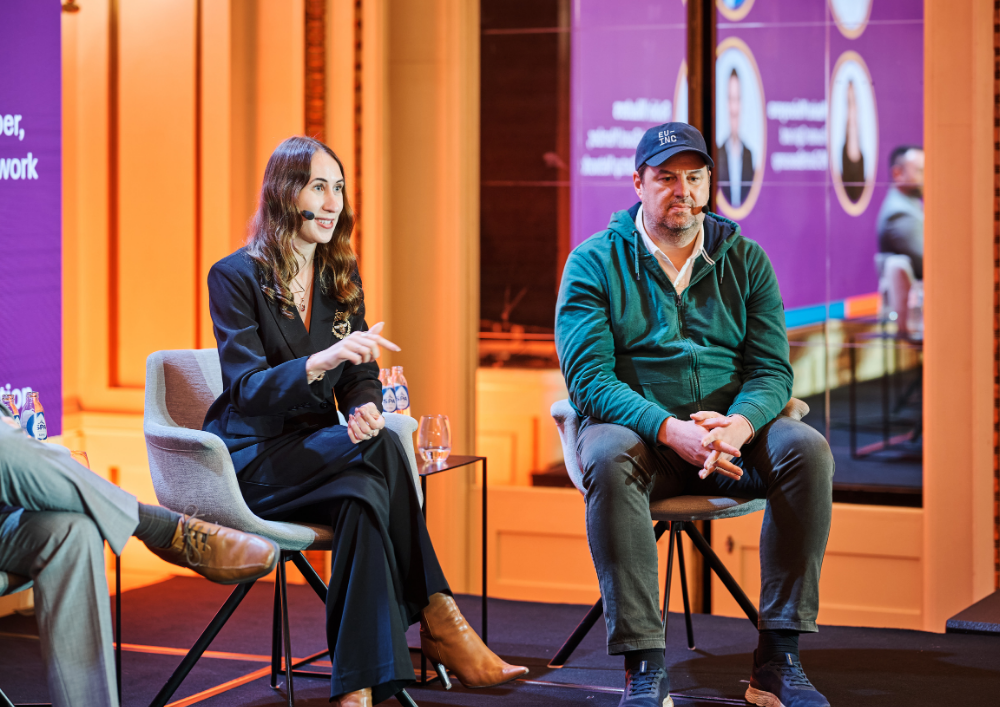
Our MD, Masha Moisseyeva, was recently invited to a crucial, closed-door policy event in Brussels to discuss how the current wave of EU regulations is impacting the growth of startups. She joined a panel with the European Startup Network in front of senior EU Commission officials, MEPs, and representatives from major tech companies.The message was clear: Scaling in the EU is unnecessarily hard.
Key Learnings & Challenges Shared
AI tools help advertisers optimize in real time by analyzing user behavior, improving ad targeting, and the delivering better results without constant manual effort.
1. The Fragmentation Problem
On paper, the EU has "one rulebook," but in reality, we face 27 Member States leading to 27 interpretations. This fragmented regulatory environment is a major factor driving companies to "flip" to the US.
2.The Incident Reporting Nightmare (Peak Chaos)
For SMEs, a single security or data incident can trigger overlapping, complex, and sometimes contradictory reporting obligations across multiple acts:
- NIS2: 24h/72h reporting
- GDPR: 72h reporting
- AI Act: 2 to 15-day windows
- DORA/CRA: Additional layers of compliance
When a startup is forced to notify customers and partners while they are still in "What happened?" mode, it isn't just stressful—it’s commercial suicide. Premature reporting can cause irreparable damage to a brand's reputation before the facts are even established.
3.The Language of Ambiguity
Compliance is impossible without clarity. Currently, there is a lack of consistent definitions for critical terms like "incident," "risk," or "systemic." Without a clear map, startups are left guessing, wasting precious resources on legal counsel that should be spent on product innovation.
Our Call to Policymakers: One Entry Point
If the goal is genuine "simplification," the EU must create a single, centralized body to help SMEs with triage, applicability, and reporting obligations.One entry point. One timeline. One set of instructions. Not five competing PDFs.
We strongly support the EU–INC initiative and propose that this centralized body could serve a similar function, but specifically for regulatory guidance.
On Tech Sovereignty
If the EU is serious about tech sovereignty, policymakers must lead by example: Start using and supporting EU-based providers. You cannot advocate for sovereignty while running operations on non-EU models and cloud infrastructure. Supporting companies like Mistral needs to move from rhetoric to practice.
We remain optimistic and will continue to help founders scale despite the noise.
Explore more blogs


.jpg)


.svg)